Financial Services Data Exchange Solutions
Transforming Financial Services with Data Exchange
Unlocking the potential of data in Financial Services
The Financial Services industry thrives on actionable insights derived from vast amounts of data. Retail banks analyze anonymized customer transactions to personalize services, private equity firms explore multiple data sources for investment opportunities, and hedge funds rely on financial and non-financial data - known as “alternative data" - to train, then feed in real time, their investment algorithms. Yet, data fragmentation, limited access to data, lack of interoperability, and regulatory scrutiny often hinder their ability to fully capitalize on these opportunities.
A robust Data Exchange solution addresses these challenges by enabling secure access and exchange of all types of data. For instance, investment firms can integrate satellite imagery and sentiment analysis to evaluate supply chain disruptions before financial reports are published. Similarly, retail banks can collaborate with FinTechs in open banking initiatives, providing customers with seamless digital experiences while adhering to regulations such as the Financial Data Access Regulation (FiDA).
By fostering collaboration across traditional and emerging players, such as FinTechs and technology providers, financial institutions can unlock new value streams, enhance decision-making, manage regulatory requirements, innovate with confidence in a secure, compliant and trusted data ecosystem.
Building trusted Financial Services data spaces
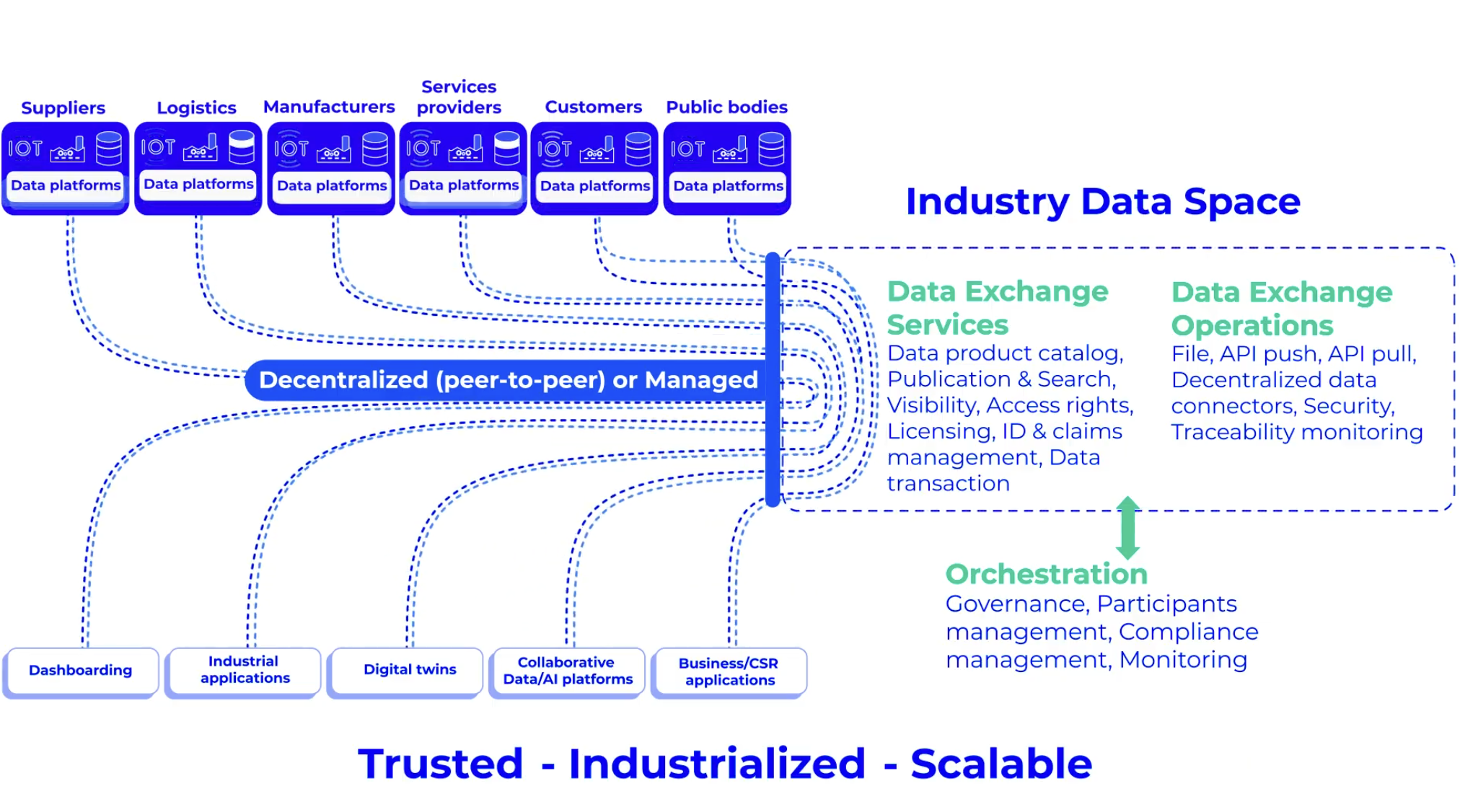
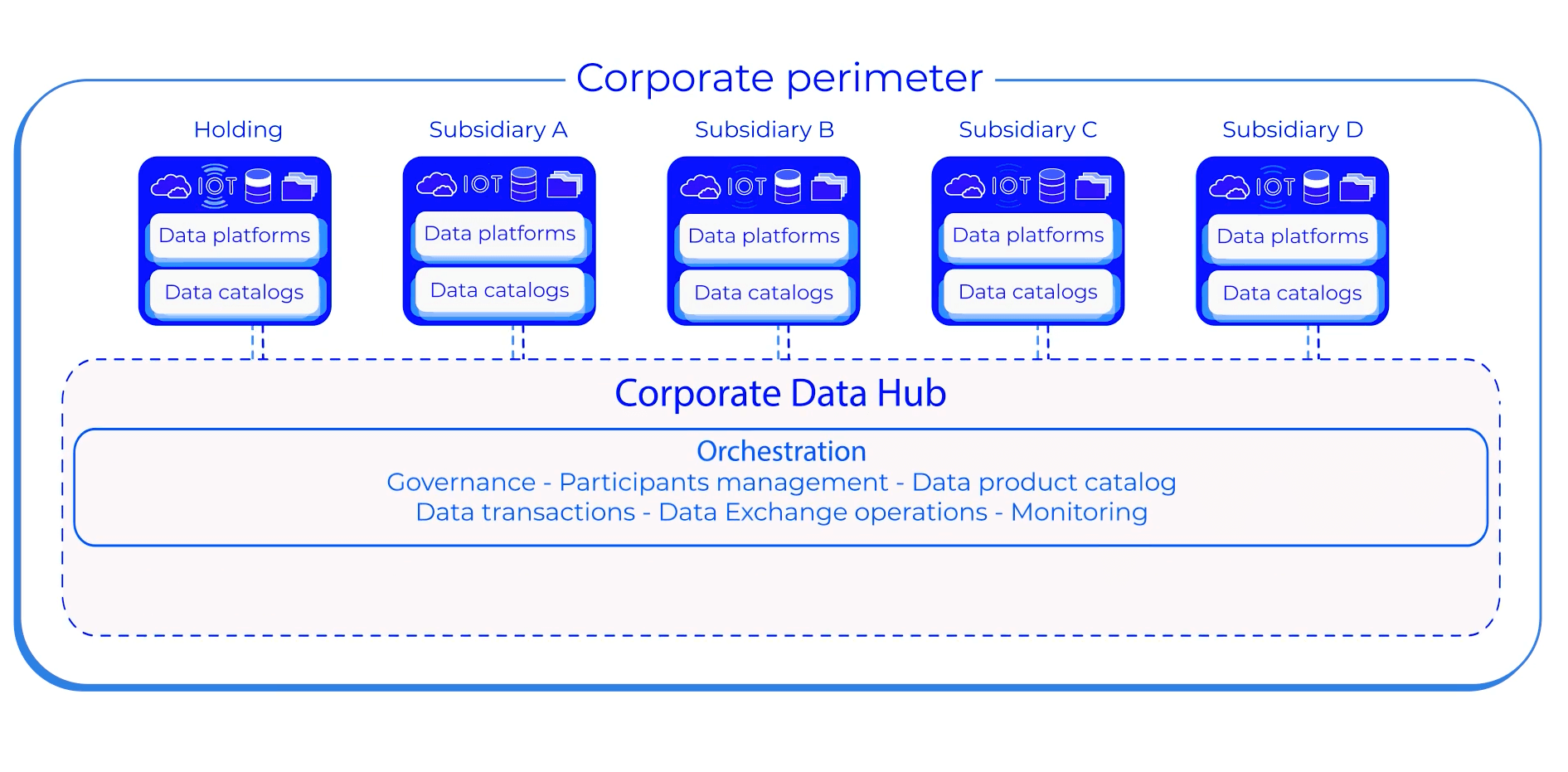
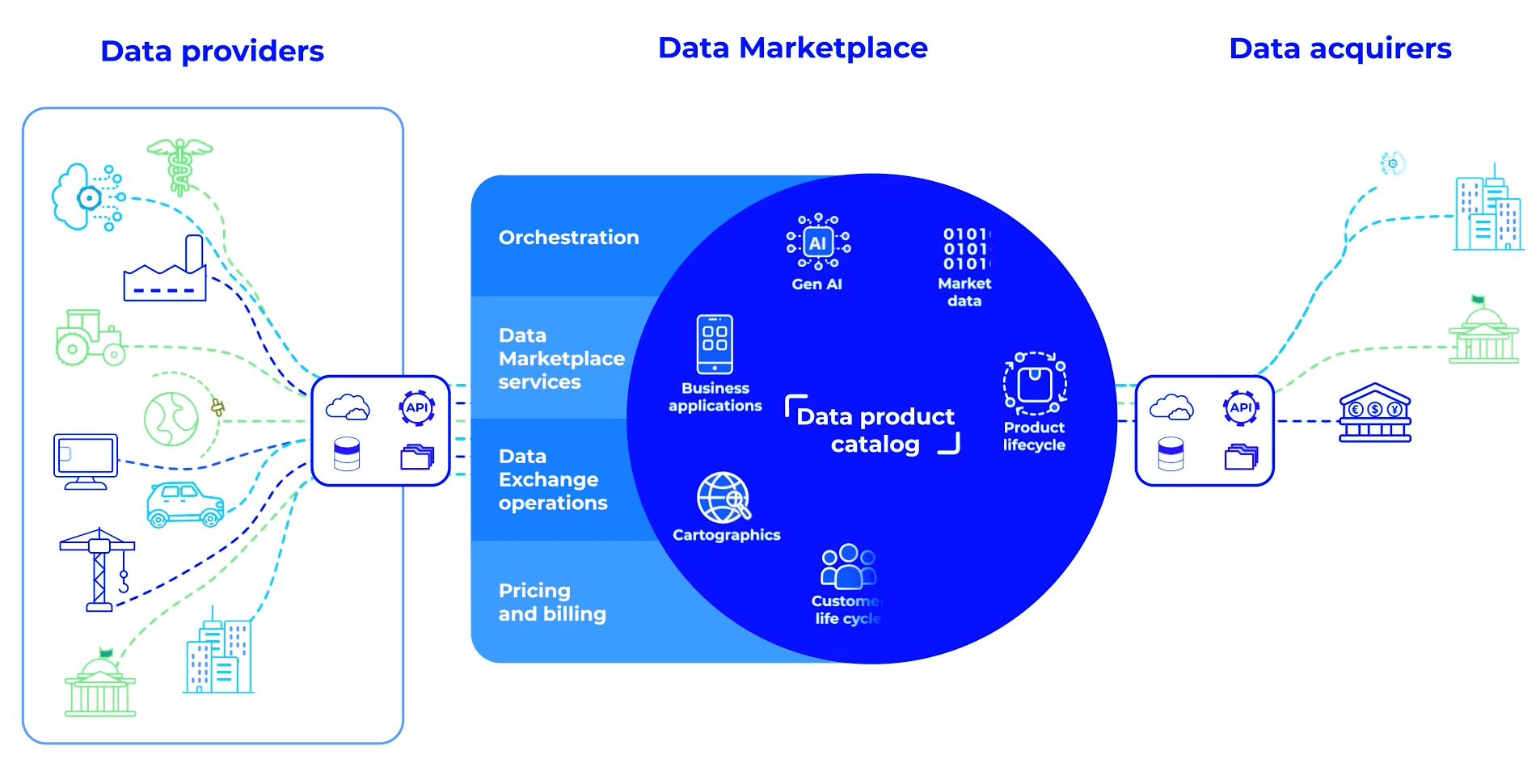
Trusted Financial Services data spaces provide secure and collaborative ecosystems for financial organizations, enabling them to share, access, distribute and commercialize data while staying compliant with regulations such as the FiDA, Data Governance Act and GDPR. Specialized data spaces may emerge for retail banking, investment banking, or alternative data providers, each tailored to the unique requirements of its participants, reflecting the diversity of needs across the financial sector.
Retail Banking
Retail banks are under pressure to innovate while ensuring compliance. Data Exchange solutions empower them to:
- Launch hyper-personalized financial products based on customer behavior analysis
- Enhance fraud detection by sharing suspicious transaction patterns across institutions
- Collaborate with FinTechs on open banking initiatives, providing customers with consolidated financial insights
- Monetize anonymized spending data for market research while safeguarding privacy

Investment Banking
Investment banks handle complex data flows across markets and stakeholders. Data Exchange enables them to:
- Access real-time market and trading data for strategic decision-making
- Share risk models with partners to collaboratively address volatile market conditions
- Facilitate compliance by automating the sharing of trade reports with regulators
- Support mergers and acquisitions (M&A) by securely exchanging financial and operational data between parties

Private Equity and Hedge Funds
These firms leverage alternative data to gain a competitive edge in investment decisions. With Data Exchange, they can:
- Access satellite imagery to monitor factory activity or supply chain disruptions
- Incorporate sentiment data from news and social media to gauge market dynamics
- Combine public records and ESG data to evaluate a company’s sustainability performance
- Securely share due diligence data with co-investors or regulators during deal structuring

FinTech Companies
FinTechs require streamlined data access to scale and innovate. Data Exchange supports them by:
- Facilitating seamless integration with traditional banks for payment processing and credit scoring
- Enhancing fraud detection by aggregating transaction data from multiple institutions
- Providing access to anonymized consumer data to refine AI-driven financial solutions
- Accelerating the deployment of real-time payment systems and digital wallets
Trusted Data Transactions - A harmonised European standard
Trust drives collaboration and cements the relationship between parties engaged in a data transaction. Building trust is critical to foster a strong, resilient data economy. As of March 25, 2026, the CEN & CENELEC officially made available the first standard in the harmonised European Standard series on Trusted Data Transactions —EN 18235-1:2026, requested by the European Commission as part of Mandate M/614 - EU Trusted Data Framework.
Dawex has been instrumental in the launch in 2023 of a pre-standardization process within the European Committee for Standardization (CEN), on Trusted Data Transaction , bringing together numerous organizations, associations and corporations, including the European Commission, Fraunhofer ISST, Dawex, TNO, IDSA, BDVA, Gaia-X, Fiware Foundation, Microsoft, Orange, EDF and Airbus.
Trusted Data Transaction is an important standardization initiative. Its deliverables - CWA Part 1 and Part 2 - serve as direct inputs to CENJTC25, Working Group 2, for the drafting of harmonised European Standards (hEN) on Trusted Data Transactions, requested by the European Commission and linked to the Article 33 of the Data Act.
On July 1, 2025, the European Commission has published in its final form a Standardization Request for a harmonized European Standard (hEN) on Trusted Data Transaction, under the umbrella of a European Trusted Data Framework, among other requests.
On March 25, 2026, Trusted Data Transaction Part 1 on Terminology, concepts and mechanisms, ratified in February, 2026, was made available as Harmonised European Standard ahead of the initial deadline.
Benefit from multiple Data Exchange business modelling
Explore the benefits of successful implementations
The full potential of data explodes when data circulates. All industries can benefit from the myriad of information coming from extended ecosystems such as aerospace, automotive, media, insurance or energy, just to name a few. By facilitating access to data in a trusted and secure environment, organizations can build strong data partnerships to foster innovation and build powerful use cases.