Construction & Real Estate Data Exchange Solutions
Fueling the construction industry transformation with Data Exchange
Powering the transition to Smart, Sustainable, and Circular Building
The Construction and Real Estate sectors are undergoing a massive shift towards digitalization and decarbonization, as stakeholders need to transition from siloed operations to a collaborative data-driven ecosystem.
A critical challenge lies in the discontinuity of data circulation as at each project stage, new stakeholders introduce different processes and tools, often leading to a complete breakdown of digital information when outputs must be converted back to manual processes.
As the industry moves toward Smart Buildings, BIM (Building Information Modeling), and Circular Economy goals, the ability to organize, distribute, and exchange data securely between all building stakeholders such as architects, contractors, owners, construction organizations has become a strategic priority.
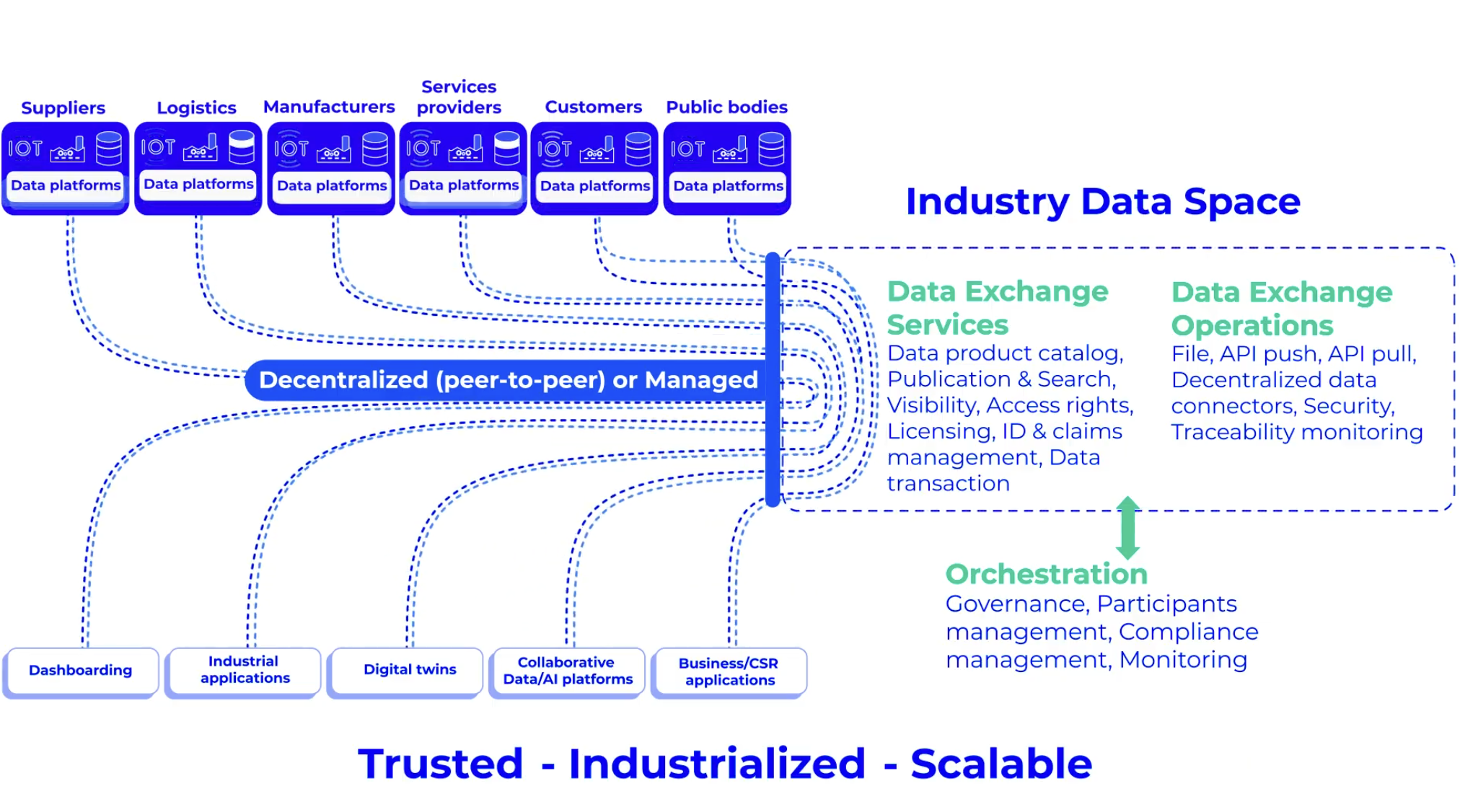
To address these challenges, creating an Industry Data Space is the foundation for successful BIM and the development of high-performance Digital Twins in order to ensure secure, interoperable, and sovereign data exchange across the entire building lifecycle, from design to demolition, including construction, renovation and facility management operations,
The Construction & Real Estate data exchange challenge
With 80% of stakeholders being SMEs, the Building, Construction and Real Estate industry is one of the most fragmented in the world. A single project involves dozens of stakeholders, each operating in silo, often struggling with the high initial costs of digital tools and a lack of specialized digital skills. The challenge lies in:
- Breaking data silos across the building lifecycle, during Design, Build and Operate phases
- Meeting environmental targets by tracking the carbon footprint of materials
- Optimizing operational efficiency on-site through real-time resource synchronization
- Increasing asset value by turning physical buildings into data-rich smart assets.
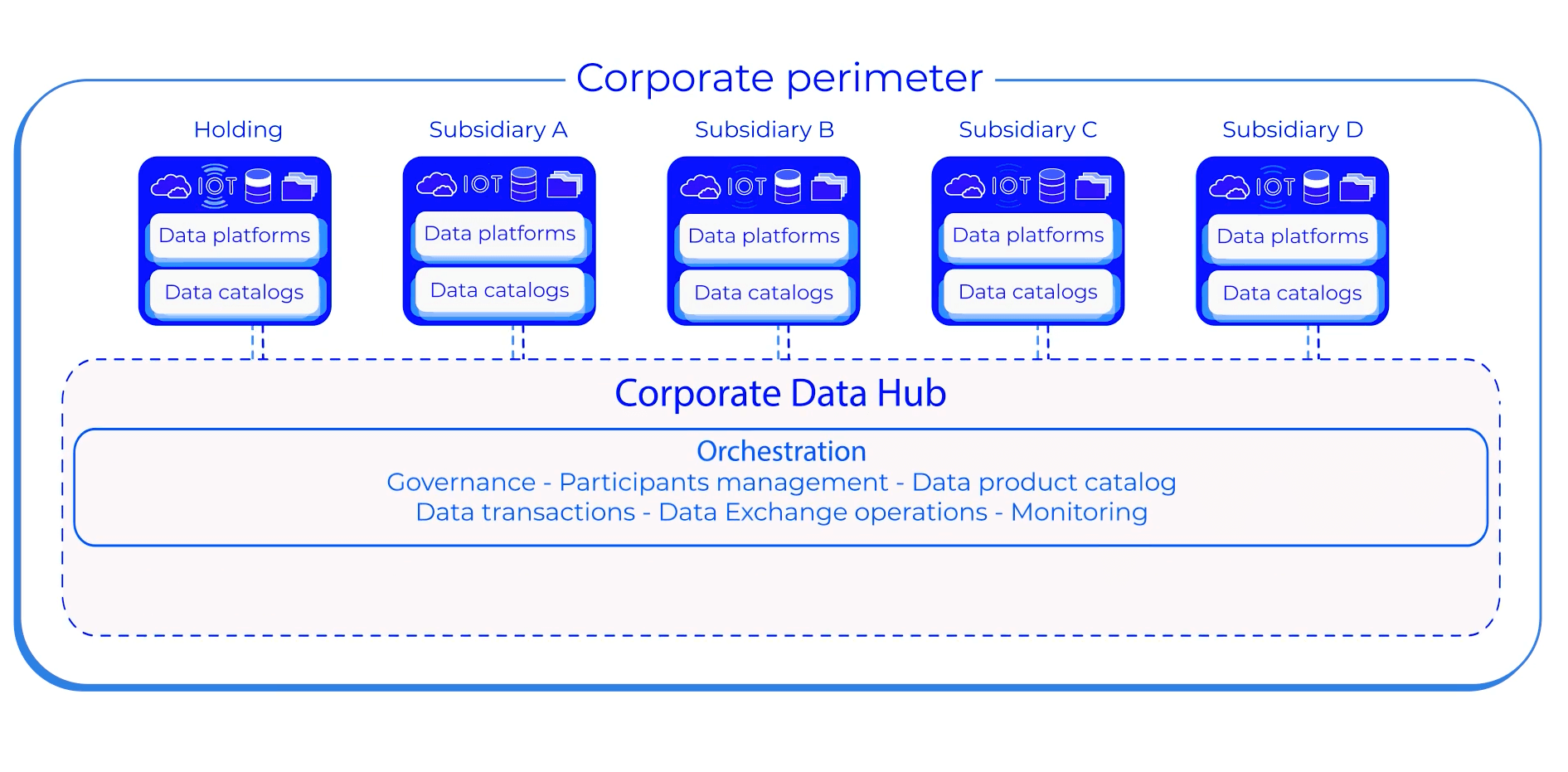
Gathering construction, building and real estate data in a secure data hub
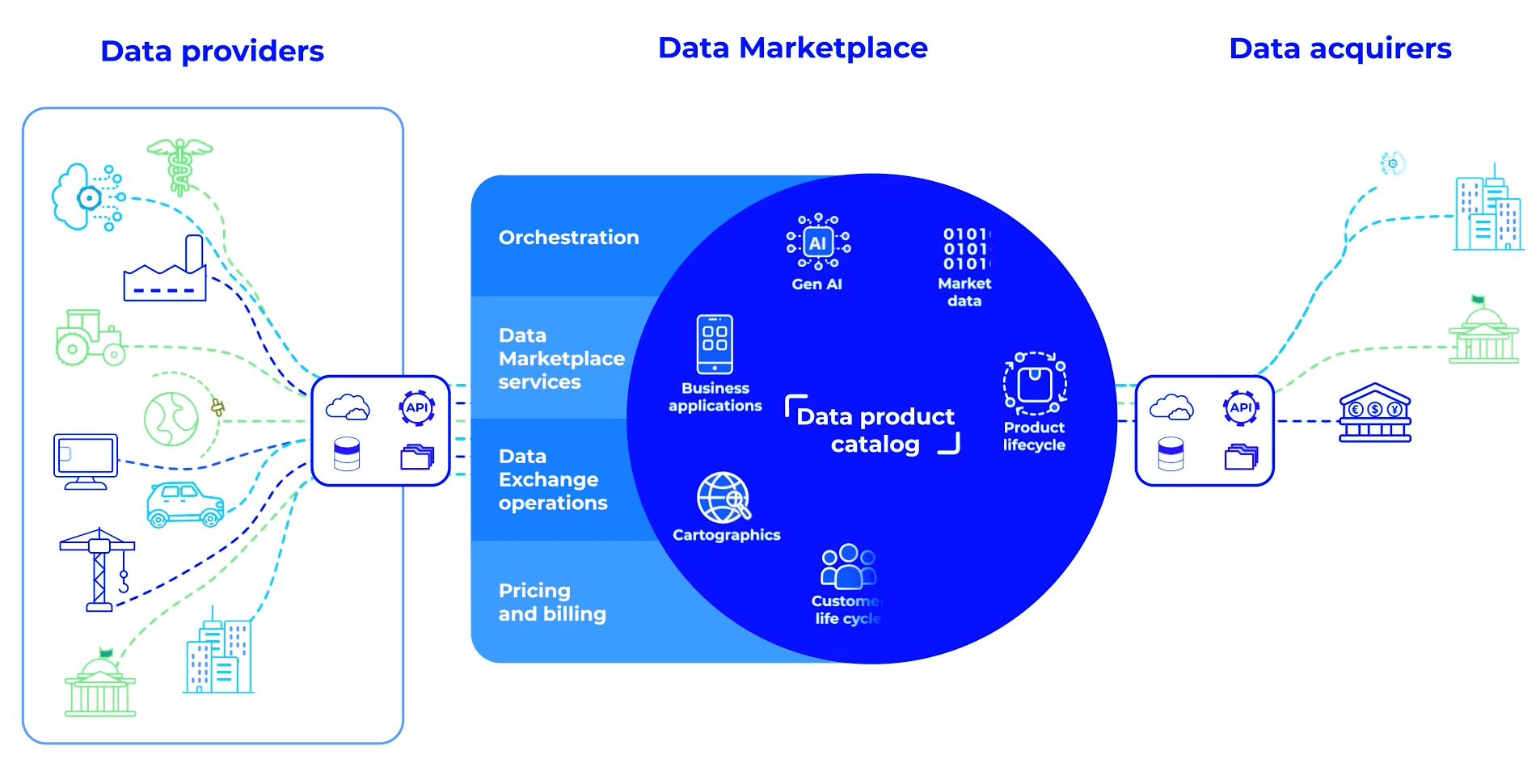
A Construction and Real Estate Data Space offers multi-sectoral organizations, public or private, a solution to source, share, distribute, exchange and commercialize data collected, generated or aggregated by organizations from the ecosystem.
Such Industry Data Space typically supports the interconnection of data producers and users, and helps them manage, structure and regulate trusted data transactions and build added-value data products and offerings. These data offerings can be made available paid or free of charge, through open data licenses or commercial licenses.
Building ecosystem
Large-scale construction projects often suffer from costly delays due to poor synchronization between material deliveries, equipment rentals, and the various subcontractors on-site. Data exchange enables the creation of an Industry Data Space where real-time geolocation, scheduling, and resource availability data are exchanged securely among all project partners. This seamless flow of information and exchange allows general contractors to orchestrate site operations with surgical precision, ensuring that the right resources are in the right place at the right time.
- Elimination of downtime for heavy machinery and workforce.
- Optimized logistics reducing the number of delivery trips and site congestion.
- Improved site safety through real-time monitoring of hazardous zones.
- Accelerated project delivery timelines and improved profit margins.

BIM collaboration & digital twins
While Building Information Modeling (BIM) is standard in design, the data often fails to transition effectively into the construction and operational phases, leading to a "digital gap." A Construction Data Space facilitates the secure and trusted exchange of high-fidelity 3D models and real-time operational data between architects, engineering firms, and facility managers. This ensures that the Digital Twin remains a "living" asset that accurately reflects the physical building, providing a reliable single source of truth for renovations, repairs, and future urban planning.
- Seamless handover of digital assets from construction to operations.
- Reduced error rates during the construction phase through model alignment.
- Faster decision-making based on real-time building performance data.
- Streamlined collaboration across multi-disciplinary engineering teams.

Predictive maintenance & building operations
- Significant reduction in overall building operational and energy expenses.
- Extended lifespan of critical mechanical and electrical equipment.
- Enhanced occupant comfort through optimized climate and lighting control.
- New revenue streams by offering data-driven services.

Circular economy & material traceability
The construction industry is under pressure to reduce waste and meet "Green Building" labels, but tracking the origin, composition, and reuse potential of materials across a fragmented supply chain remains a major hurdle. By implementing a Data Space where manufacturers, builders, and recyclers can securely exchange Digital Product Passports, stakeholders gain full visibility into the material lifecycle. This data-driven collaboration ensures that every component is documented from production to demolition, turning buildings into "material banks" for future projects.
- Full transparency on the carbon footprint of construction materials.
- Simplified compliance with environmental regulations and ESG reporting.
- Significant reduction in landfill waste through enhanced material recovery.
- Increased asset value by securing sustainability certifications (LEED, BREEAM).

Real estate portfolio optimization
Real estate investors and asset managers often struggle with fragmented data spread across different property management systems, tax records, and local market reports, leading to delayed or inaccurate investment decisions. By establishing an Industry Data Space that interconnects internal financial metrics with external market intelligence and socio-demographic data, organizations can gain a real-time, 360-degree view of their portfolio performance. This secure and trusted data exchange allows for the seamless integration of third-party data—such as footfall patterns, local economic indicators, and environmental risks—enabling managers to benchmark their assets against the market and identify high-yield opportunities with precision.
- Enhanced valuation accuracy through the integration of real-time market and transactional data.
- Optimized asset allocation by identifying underperforming properties and emerging high-growth areas.
- Improved risk mitigation through predictive modeling of market volatility and regulatory shifts.
- Higher tenant retention by leveraging behavioral data to tailor amenities and lease strategies.

A powerful technology to streamline your Construction & Real Estate Data Exchange
Building a Construction & Real Estate Industry Data Space requires robust, secure, and compliant technology. Dawex Data Exchange solution enables Construction and Real Estate stakeholders to:
- Orchestrate a complex data ecosystem of subcontractors, suppliers, engineering construction firms, and contracting authorities.
- Distribute and exchange sensitive building data while maintaining control over the data being exchanged.
- Create new revenue streams by commercializing high-value data products on, for example, occupancy patterns and energy performance.
- Ensure compliance with data regulations such as the European Data Act, the Data Governance Act, and standards such as the future harmonized European standard on Trusted Data Transaction, Gaia-X de facto standard, and ISO Construction standards.
- Interconnect with other data spaces and market solutions, thanks to its open, interoperable and flexible architecture.
Key benefits for the Construction & Real Estate ecosystem
By implementing Dawex Data Exchange Solution, stakeholders in the entire Building, Construction and Real Estate sectors gain immediate value:
- Real Estate Developers: Maximize the ROI of assets through data-driven facility management.
- General Contractors: Improve margins by reducing waste and optimizing logistics.
- Architects & Engineering Firms: Accelerate design phases through seamless BIM data sharing.
- Building Material Manufacturers: Gain visibility into product lifecycles and circularity.
- PropTechs & Service Providers: Access the data needed to develop innovative smart-building apps.
Benefit from multiple Data Exchange business modelling
Address business challenges by leveraging Construction data
By orchestrating its own Data Exchange solution, your organization takes leadership by positioning itself at the core of the ecosysteme. More broadly, implementing a data exchange strategy fosters productivity and efficiency, increases company valuation, tackles decarbonation objectives, reduces risks, and helps generate new sources of revenue.
Dive into compelling resources on Data Exchange
Fuel your strategy with the latest on Data Exchange. Subscribe today!
Receive compelling news on data spaces, data ecosystems, data collaboration, and the benefits of Data Exchange in improving competitiveness and driving AI-innovation.